
Prohibition did not create jazz, but it changed the business around it. Toledo's location next to a already-dry Michigan, its reputation as a wide-open town, and its network of clubs, gambling rooms and after-hours establishments created a busy nighttime economy where musicians could find work.
The story is part music history, part city history, and part reminder that some of the best-paying bandstands in town sat inside a complicated world of vice and organized crime.
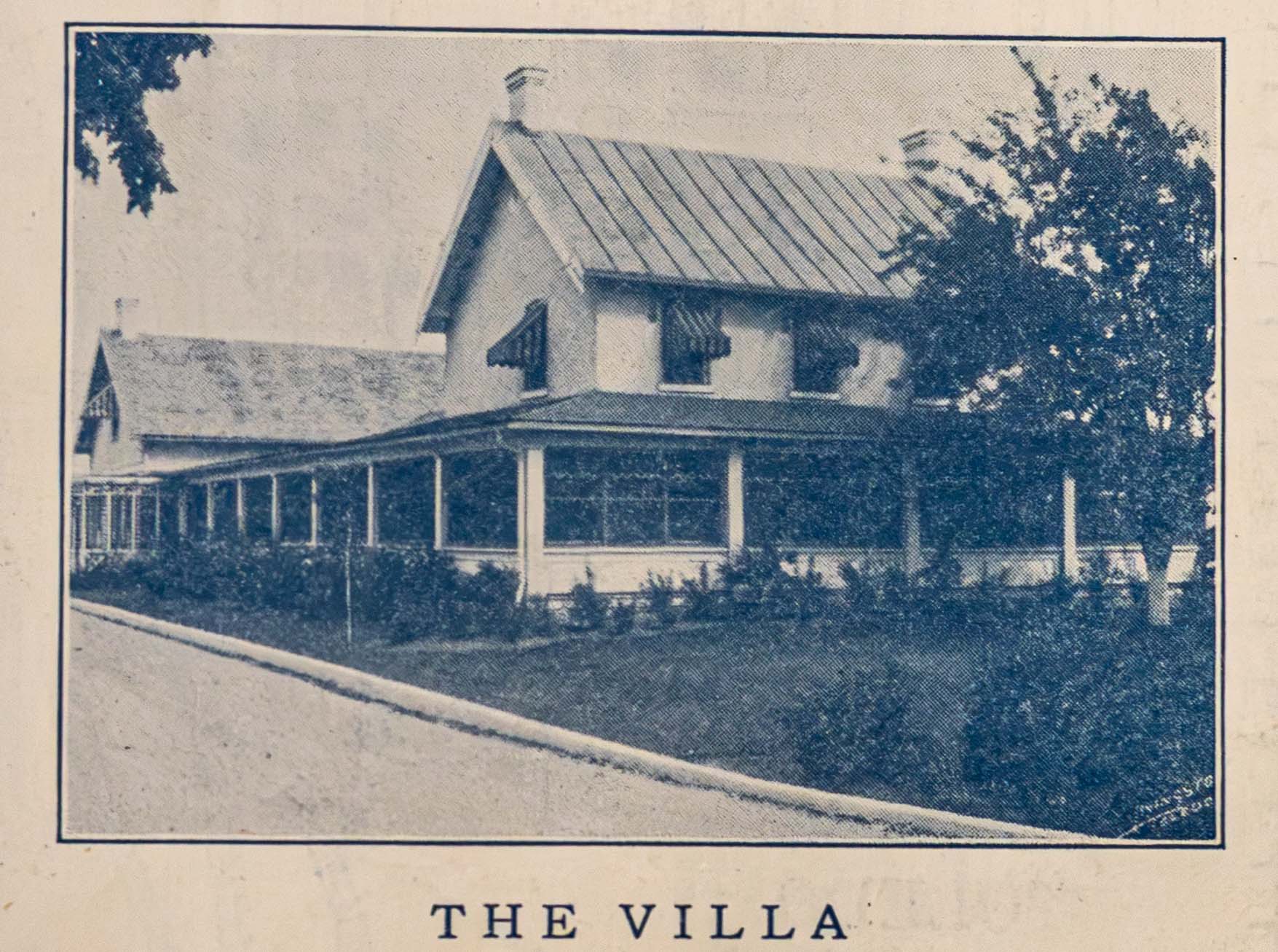
With Michigan already dry and national Prohibition beginning in 1920, Toledo's geography made it a natural part of the bootleg liquor trade.
Restaurants, clubs and roadhouses learned that food alone was not enough. Alcohol, gambling, dancing and live music became the attraction. La Tabernilla is the clearest example — an upscale roadhouse that turned to jazz and gambling when straight dining stopped paying.
Bands worked where audiences spent money. That put jazz musicians into speakeasies, dance halls, dinner clubs and rooms controlled by figures well outside respectable business.
The early 1930s brought the Detroit-based Licavoli gang into Toledo's vice trade — firebombings, the murder of club owners, and the assassination of bootlegger Jack Kennedy. The music continued inside a nightlife economy that was both lucrative and dangerous.
Six rooms whose advertising survives. The most notorious of them — Big Noble's, the Kit Kat Club, the Blue Lantern Inn, Chateau La France — left almost no visual trace at all.
A gambling and dancing club opened in 1924 and owned by vice boss Jimmy Hayes. Frederick Seymour's orchestra performed here through the Prohibition era.
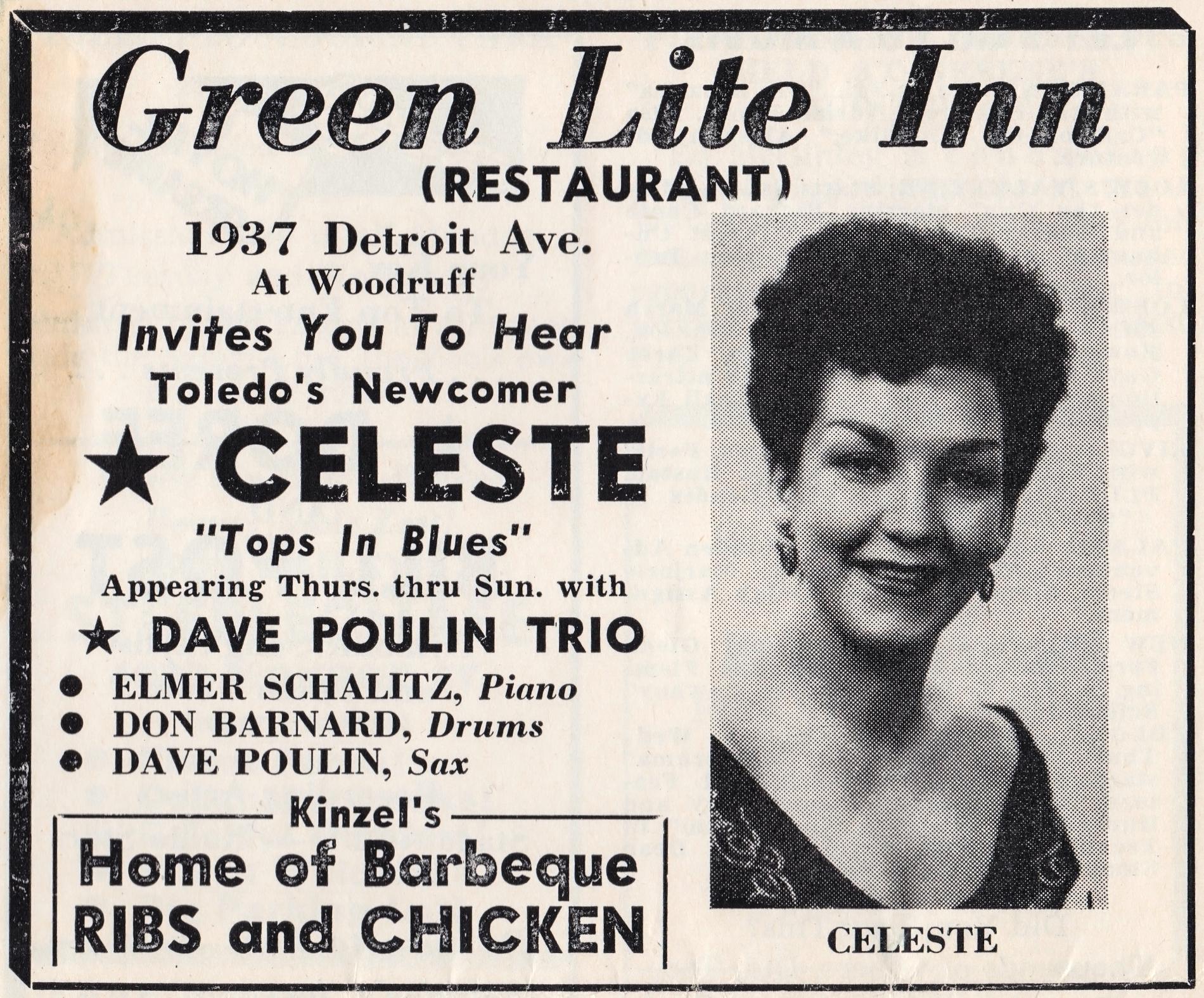
A "Black and Tan" club frequented by a young Robert Mitchum, and later by Arv Garrison and Clifford Murphy. It became a decade-long home for Mike Hollie and the Soul Merchants.
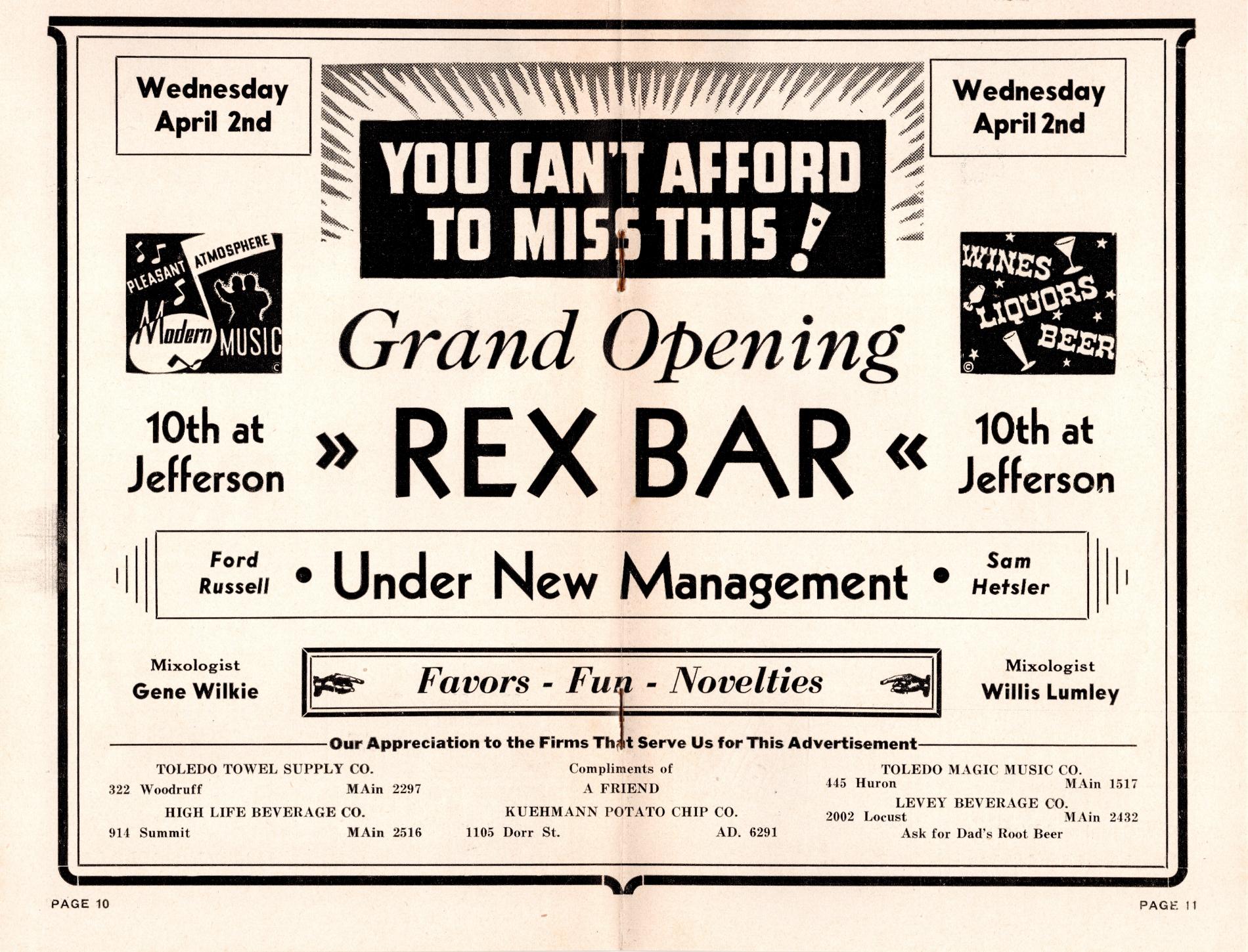
"You can't afford to miss this" — a grand opening under new management, with favors, fun and novelties. The kind of neighborhood room that kept working musicians employed.
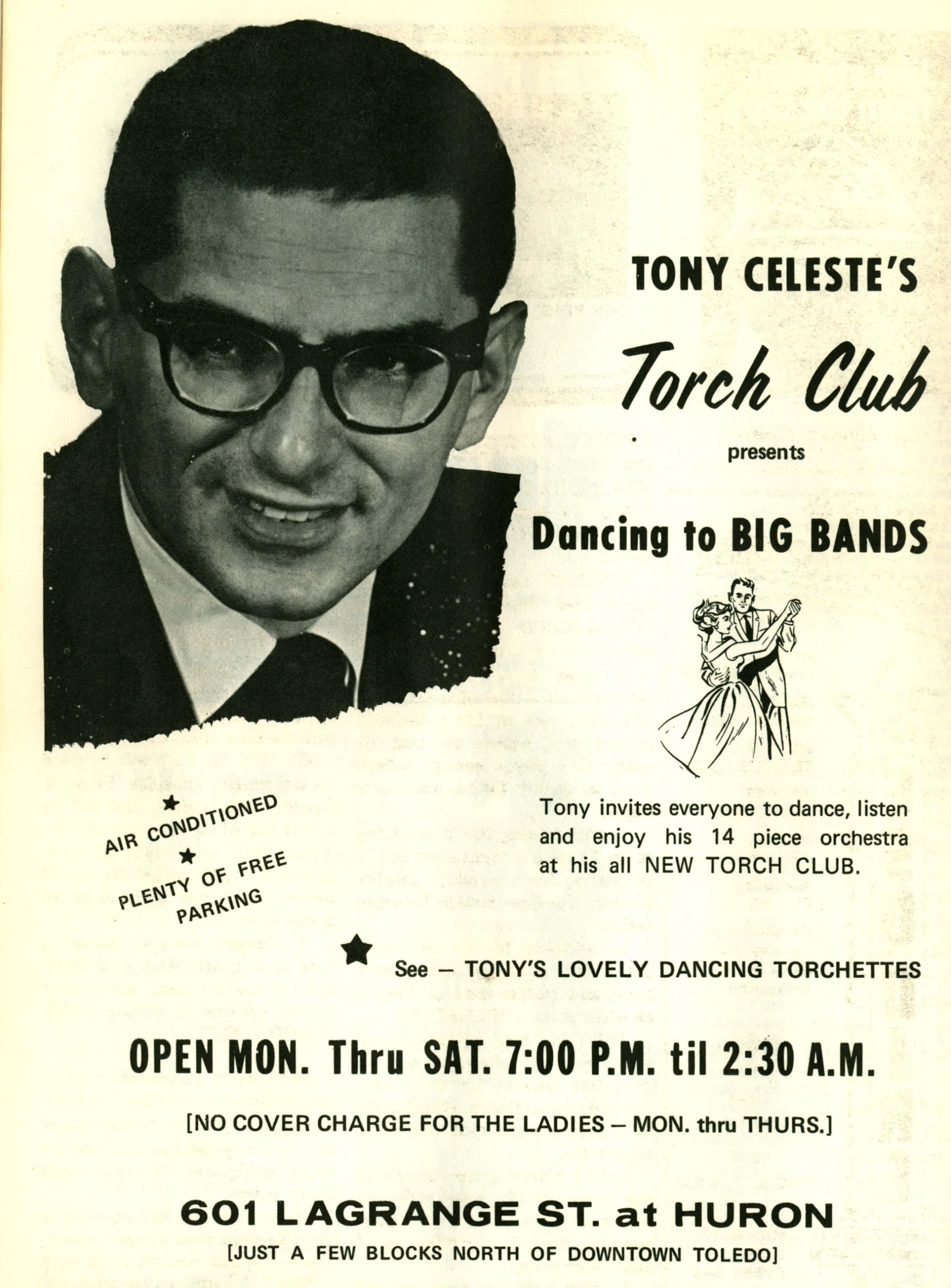
Dancing to big bands, open Monday through Saturday until 2:30 a.m., air conditioned, plenty of free parking — and Tony's Lovely Dancing Torchettes.
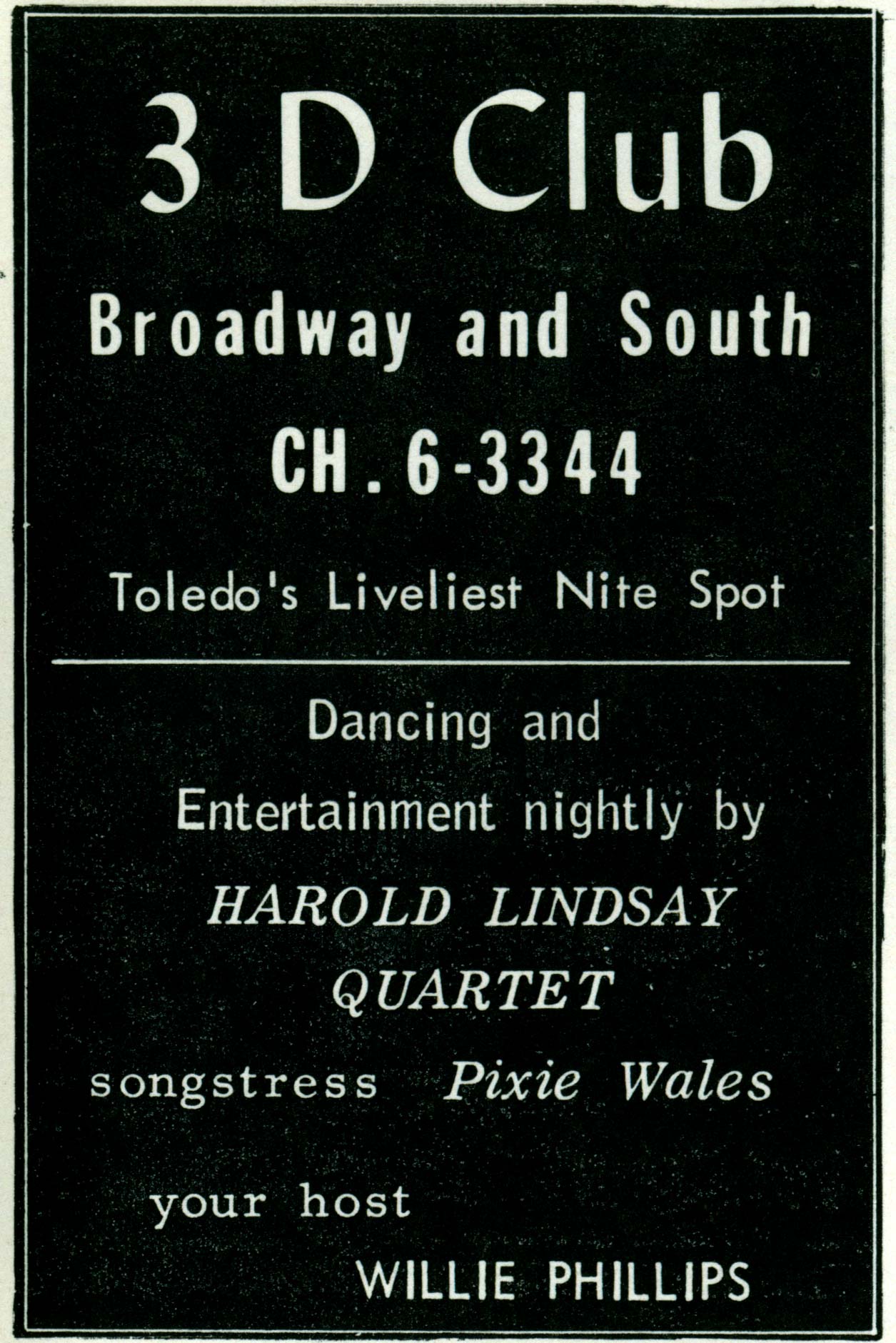
"Toledo's liveliest nite spot." Dancing and entertainment nightly by the Harold Lindsay Quartet, with songstress Pixie Wales.
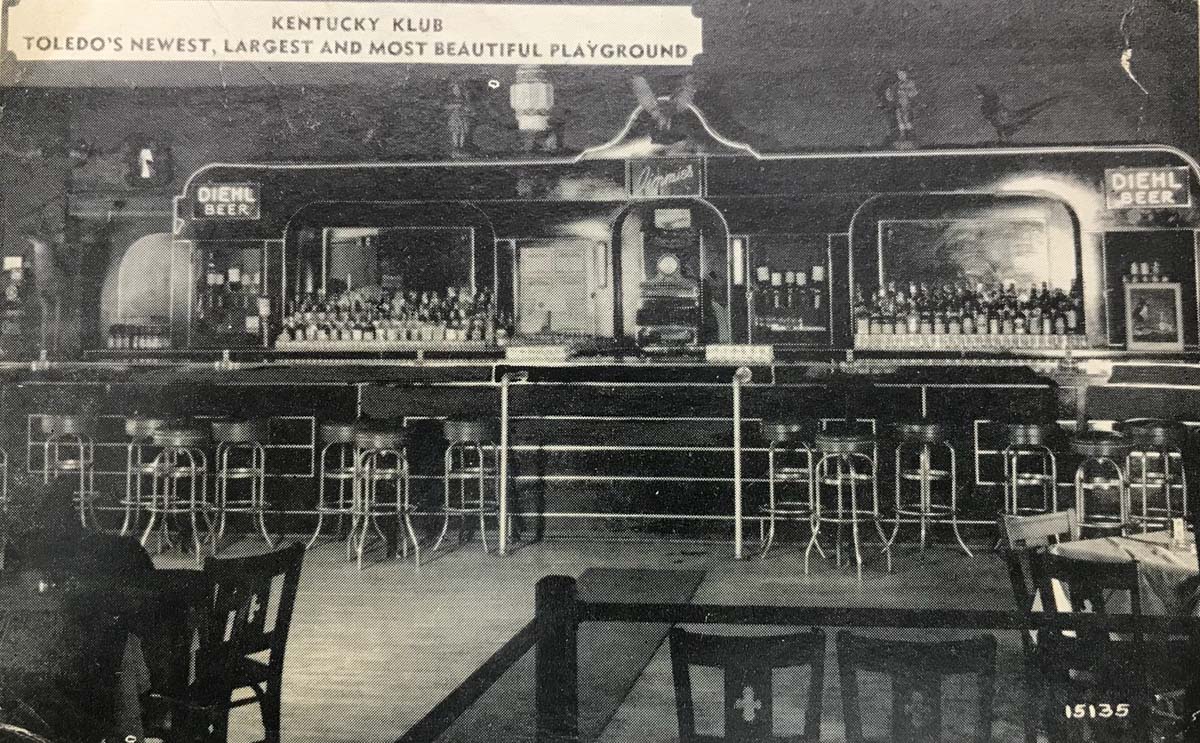
Advertised as Toledo's newest and most beautiful playhouse. One of very few interior photographs that survive from the era.
It is easy to romanticize speakeasies and gangsters. The more useful history asks what these businesses meant to working musicians — who controlled the rooms, who was allowed inside, and what happened when the city's economy collapsed.
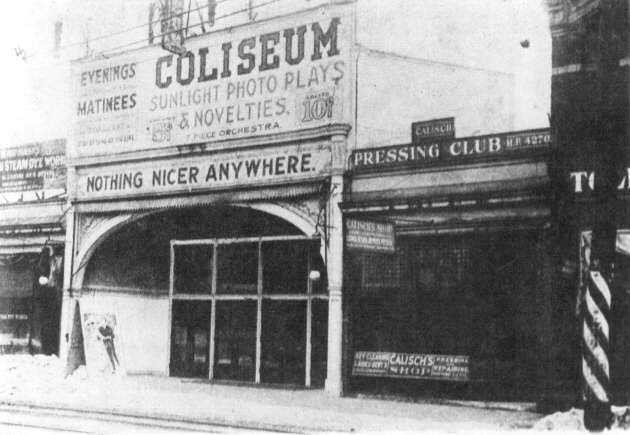
Nightlife created regular paid work for bands and solo musicians at a time when live music was central to entertainment. For a blind teenage pianist, a steady club residency was a professional education.
Race, class and neighborhood shaped who could work, listen and move freely through Toledo's entertainment world. Many of the best-documented rooms were closed to the musicians who made them worth visiting.
The Depression, the 1931–32 banking collapse, gang violence and the repeal of Prohibition in December 1933 all reshaped the club business before swing took over the next chapter.