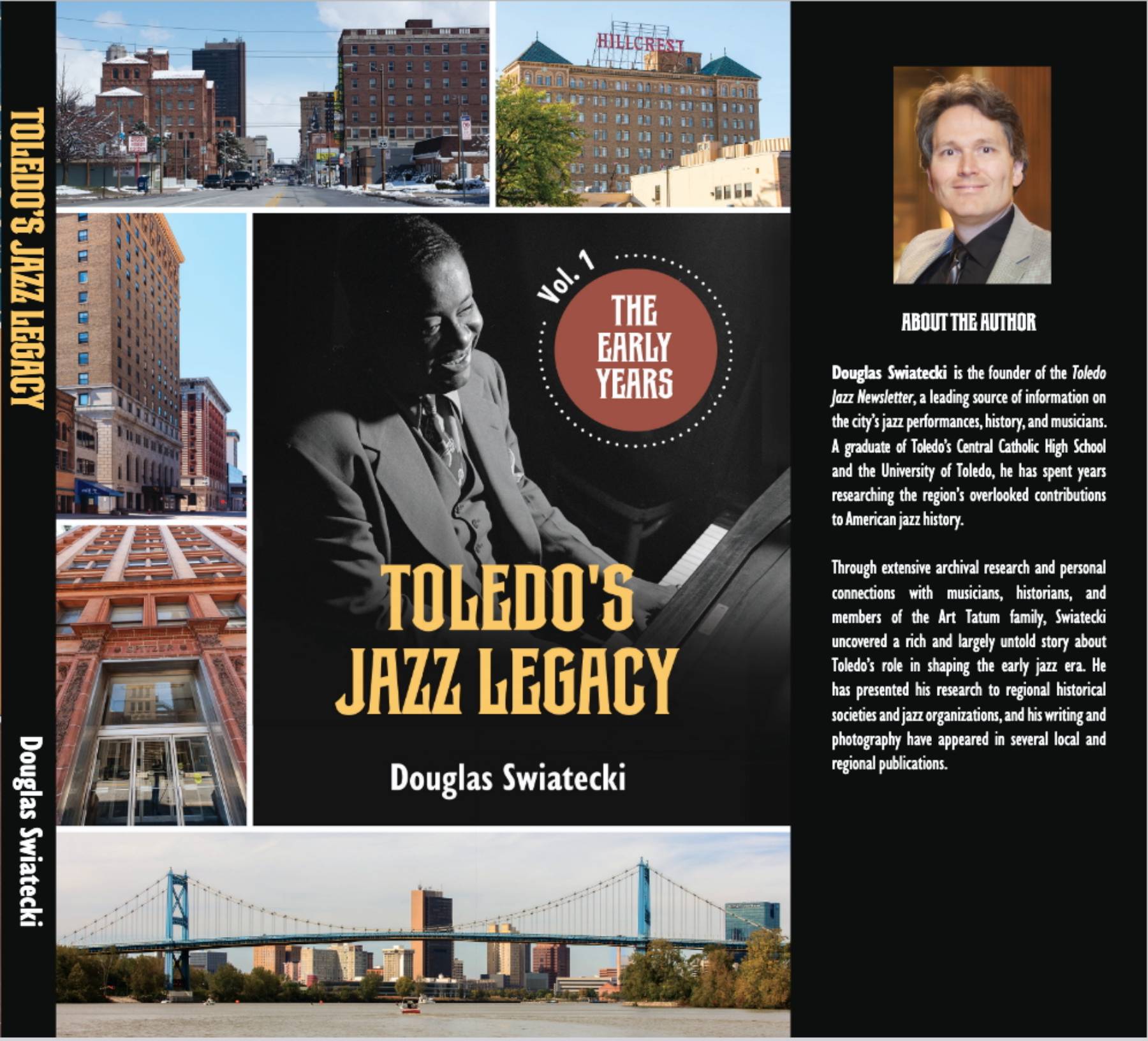
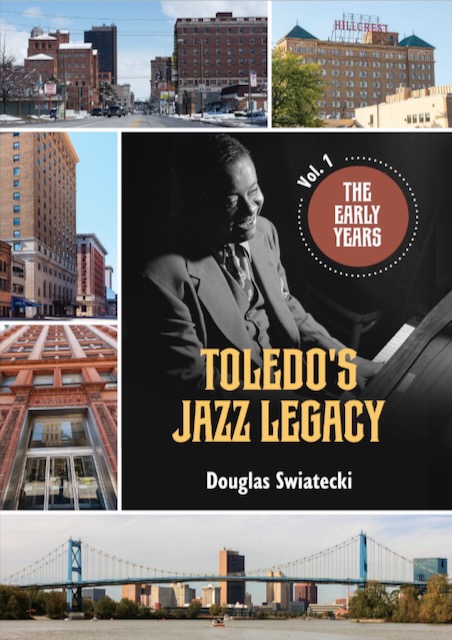
A citywide jazz history built from newspaper archives, interviews, photographs, family material and the traces left by rooms that disappeared decades ago.
Douglas Swiatecki's first volume follows Toledo from the conditions that made jazz possible through Art Tatum, swing, bebop and the musicians who carried the story toward mid-century.
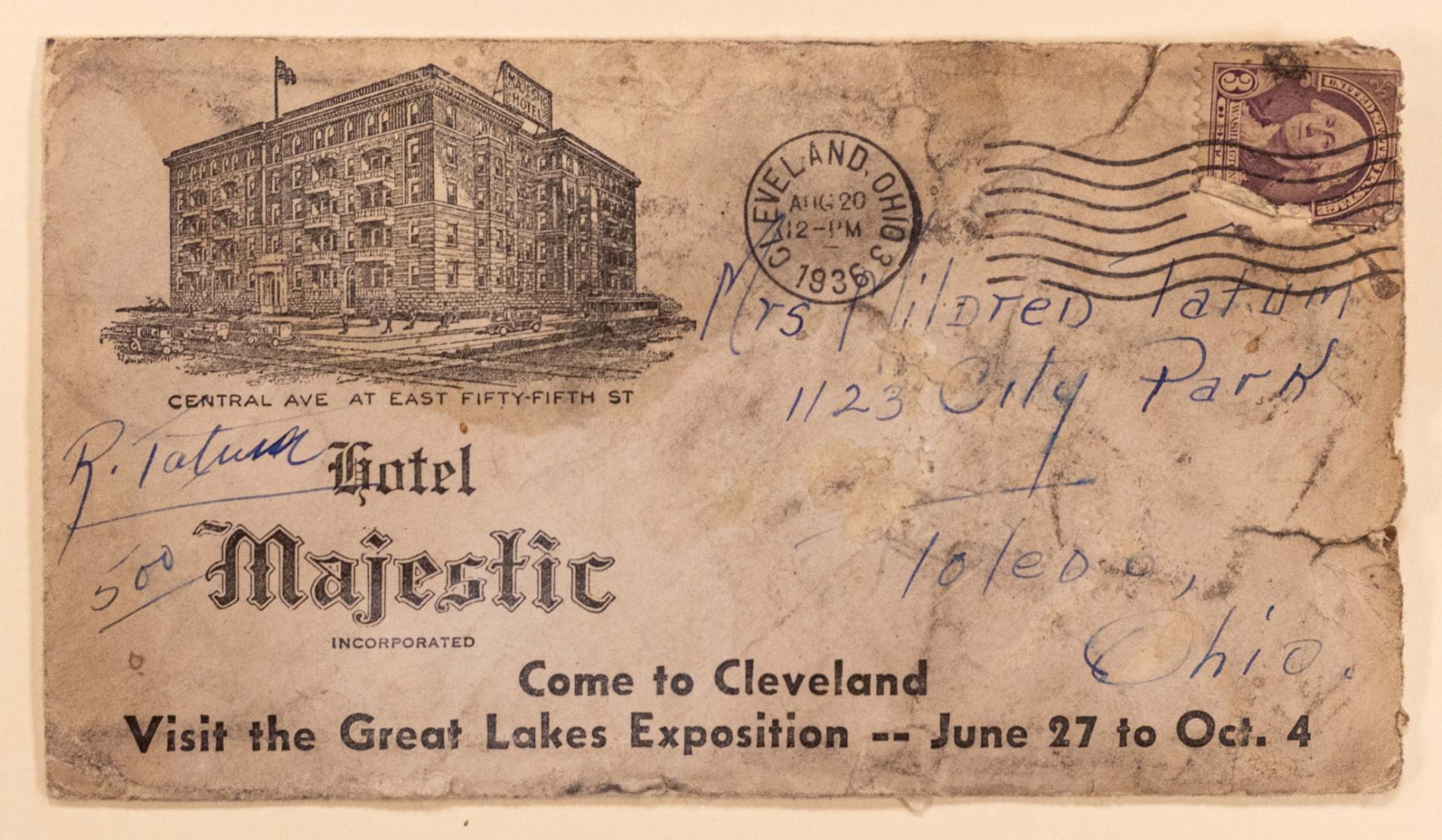

Historic newspapers, city directories, library collections and documented addresses establish when people and places appear in the record.
Interviews and oral histories explain what a room felt like, who mattered, how musicians learned, and why a name that looks small on paper could loom large on a bandstand.
Previously unpublished Tatum family material — letters, mortgages and photographs — adds detail to a story usually repeated from the same familiar biographies.
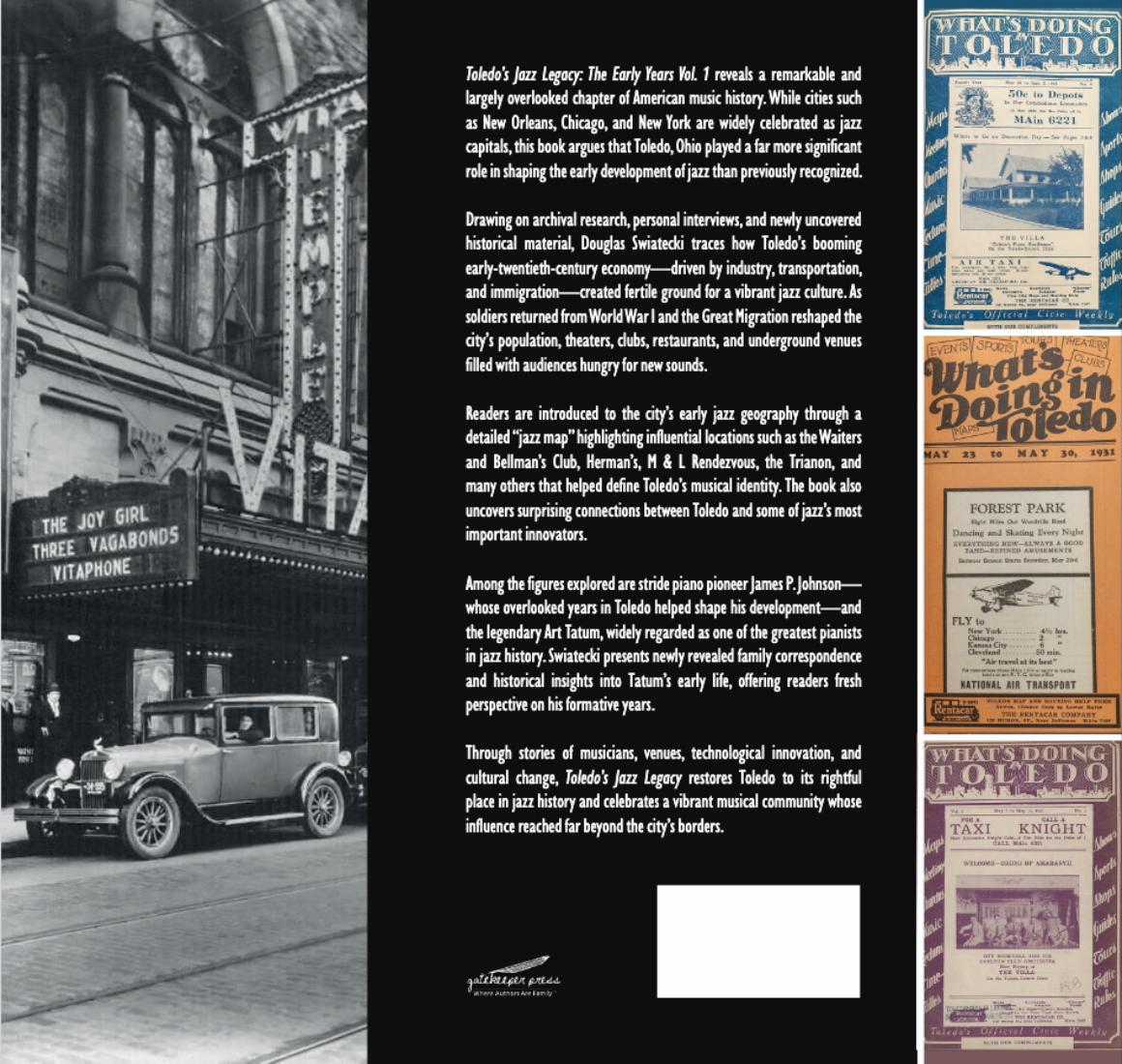
The Jazz Invitation. How Toledo's industrial growth, transportation network, theaters and schools created the conditions for a serious musical culture.
The Great Migration. How African American families arriving from the South became part of the city's social, business and musical life.
Vaudeville, Ragtime and Roy Bargy. The entertainment world before jazz, Scott Joplin's Toledo visit, and the Toledo-raised pianist who carried ragtime into a national career.
The Jazz Age in Toledo. The documented arrival of jazz, Prohibition, early clubs and dance halls, radio, and James P. Johnson's Toledo residency.
Art Tatum: A Toledo-Made Talent. The centerpiece — family, childhood, education, eyesight, the family piano, local gigs, radio work and the path to New York.
Prelude to Swing. The Depression, Toledo's banking collapse, the Licavoli gang's violent takeover of the vice trade, and the end of Prohibition.
Swing Arrives in Toledo. The Trianon, local big bands, wartime music culture and the citywide dance economy.
Vivien Garry and Arv Garrison: String Blues. A dual portrait of two Toledo musicians whose careers reached into bebop, New York, Chicago and Hollywood.
Toward Mid-Century. Postwar clubs, bebop, blues, Indiana Avenue, and the cast that Volume 2 will explore more fully.
Tatum is not treated as an isolated genius who happened to be born here. The book rebuilds the Toledo world around him.
Ballrooms, clubs, hotels, social organizations and after-hours rooms are treated as part of the history, not as background decoration.
National names share the story with working Toledo players, bandleaders and teachers whose influence was strongest close to home.
Transportation, migration, race, industry, Prohibition, organized crime and economic change are part of the musical story.
Historic locations are plotted geographically, so a reader can see how the music moved through streets and neighborhoods.
Grounded in archives, oral histories, photographs, family material and an extensive bibliography rather than recycled legend.
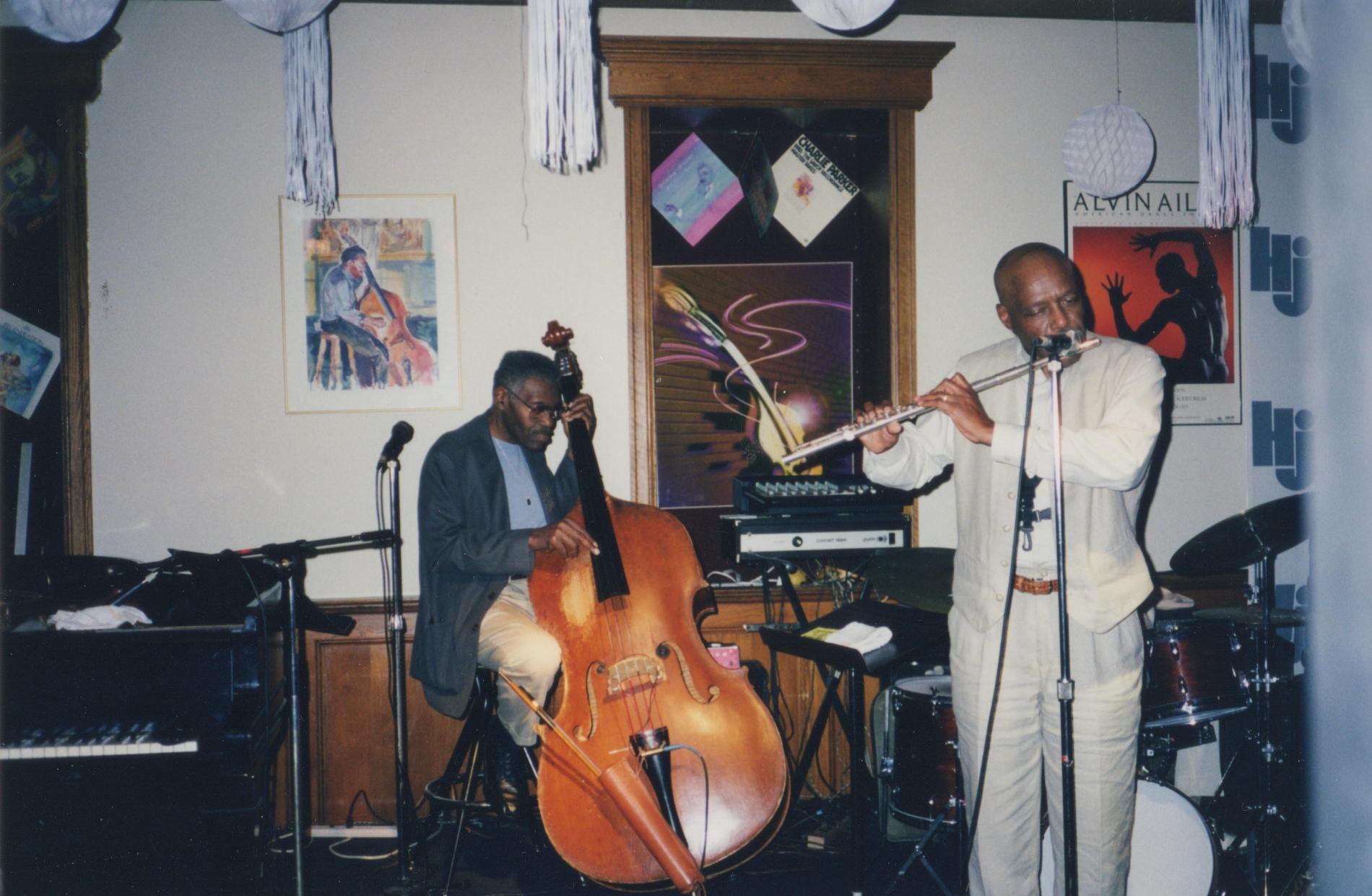
They used to call Murphy's the university of Claude and Clifford.
No. Art Tatum is the centerpiece of the early story, but the book follows the people, venues, neighborhoods and social forces that created a much larger Toledo jazz culture.
The story begins before jazz had a settled name, with Toledo's vaudeville and ragtime era, then moves through the Jazz Age, Prohibition, swing, bebop and the postwar transition toward mid-century.
Yes, but always through their Toledo connections. James P. Johnson, Fats Waller, Adelaide Hall, Charlie Parker and others appear where their stories intersect with Toledo musicians and venues.
The map is a separate print insert included with every hardcover ordered through this website. It is not sold on its own, and copies bought through other sellers ship without it.
The Later Years continues into Toledo's postwar and modern jazz decades. It is planned for Fall 2026.
Hardcover $29.99 · E-Book $12.99 coming soon.